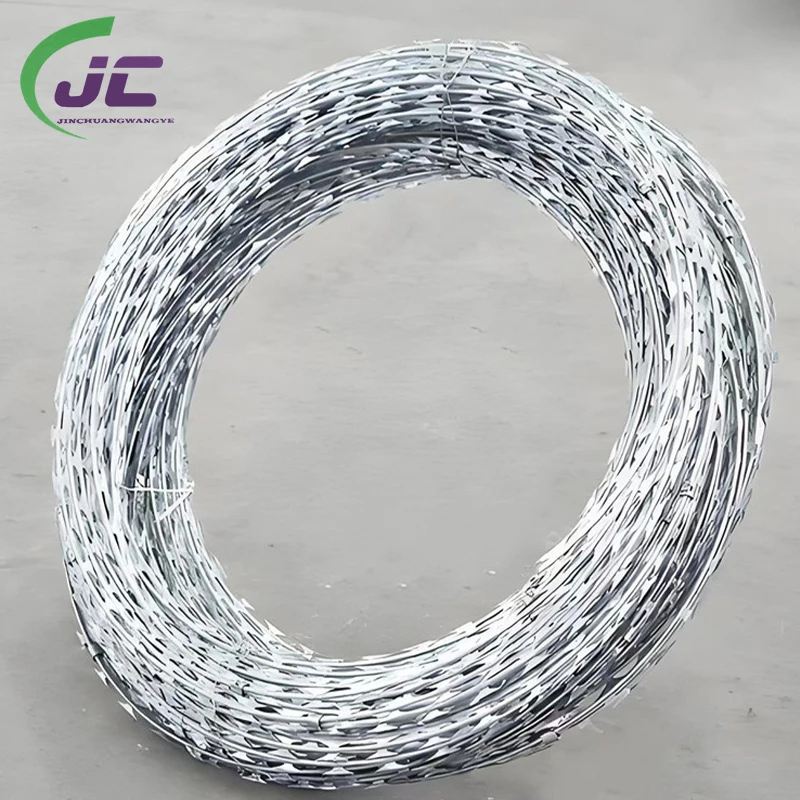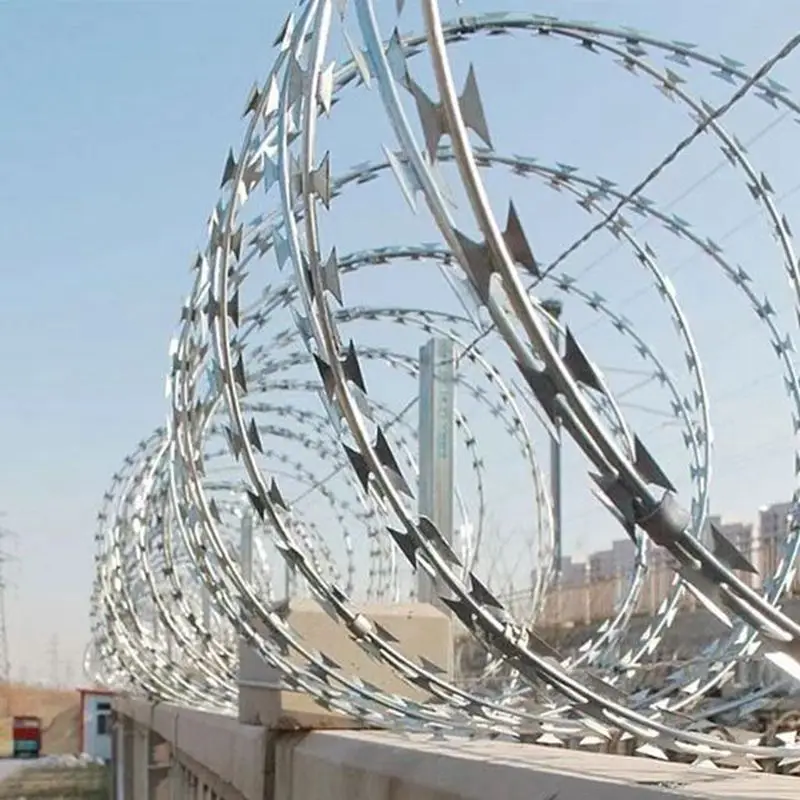
According to the latest industry data as of April 2026, the razor barbed wire sector is currently navigating a critical phase characterized by steady growth and technological advancement.
Date: 2026-04-22 Categories: News Hits: 401
According to the latest industry data as of April 2026, the razor barbed wire sector is currently navigating a critical phase characterized by steady growth and technological advancement.
Outlined below are the latest key developments within the industry:
1. Market Size and Trends: Demand Continues to Climb
Market Size: The industry as a whole maintains robust growth. Data indicates that by 2025, the market size for razor barbed wire products had surpassed 3.8 billion RMB, sustaining a Compound Annual Growth Rate (CAGR) of approximately 9.2%.
Growth Drivers:
Infrastructure and Energy: There has been a surge in demand for fencing and perimeter security solutions for highways, railways, and large-scale photovoltaic power bases.
High-Security Requirements: The demand for enhanced physical barrier protection levels—particularly in prisons, border regions, and military installations—has driven the increased adoption of high-end products.
2. Industry Landscape: Anping, Hebei—The Absolute Core
Industry Clusters: Anping, Hebei (known as China's "Hometown of Wire Mesh"), remains the undisputed center of the industry, accounting for the vast majority of the nation's production and sales volume.
Competitive Dynamics:
"Head Effect" (Market Concentration): Market concentration is increasing; large-scale enterprises holding ISO and CE certifications now hold a distinct competitive advantage in securing national-level border security projects and major infrastructure contracts.
3. Technology and Product Upgrade Trends
The industry is currently transitioning from mere "manufacturing" toward "intelligent manufacturing" and the development of "highly corrosion-resistant" solutions:
Material and Process Upgrades:
Widespread Adoption of Stainless Steel: To withstand coastal or highly corrosive environments, the utilization rate of 304 and 316 stainless steel razor barbed wire has increased significantly.
Composite Anti-Corrosion Treatments: High-end projects are increasingly adopting dual anti-corrosion processes—such as "hot-dip galvanizing combined with PVC coating" or "aluminum-zinc plating combined with nano-coating"—to achieve a service life exceeding 15 years and withstand extreme temperature fluctuations ranging from -40°C to +60°C.
High-Strength Materials: Certain high-end products are now incorporating high-carbon steel combined with heat treatment processes; this significantly boosts shear resistance, making it extremely difficult to sever the wire quickly using standard hydraulic cutters.
Standardization and Compliance:
For specific applications such as prisons and border defense, the enforcement of industry standards (e.g., GA/T 1479-2018) has become more rigorous. Procurement entities are placing increasing emphasis on critical technical specifications, such as blade thickness (≥0.5mm) and zinc coating weight (≥270g/m²). 4. Price and Cost Dynamics
Influenced by fluctuations in raw material (steel) prices, product costs have risen; consequently, there are distinct price variations across different product specifications:
Standard Hot-Dip Galvanized Type: Relatively affordable, priced at approximately 8–15 RMB per meter.
High-End Custom Type: Such as Al-Zn alloy coated, PVC-coated, or high-strength shear-resistant variants, with prices ranging from 15 to 40 RMB per meter.
Summary
The razor wire industry today is no longer merely about the simple "pulling of wire mesh"; rather, it is evolving toward high corrosion resistance (stainless steel/PVC coating), high strength (shear resistance), and standardization (compliance with GA standards). If you are seeking products designed to complement "tank mesh" systems, it is recommended that you focus your search on manufacturers in the Anping region of Hebei Province—specifically those with proven experience in supplying large-scale engineering projects and the capability to execute hot-dip galvanizing and PVC coating processes.